Talent Cannot Overcome a Misaligned System
Organizations often try to solve systemic business problems by pulling only the people lever. The operating model has to align.
Organizations often try to solve systemic business problems by pulling only the people lever. The operating model has to align.
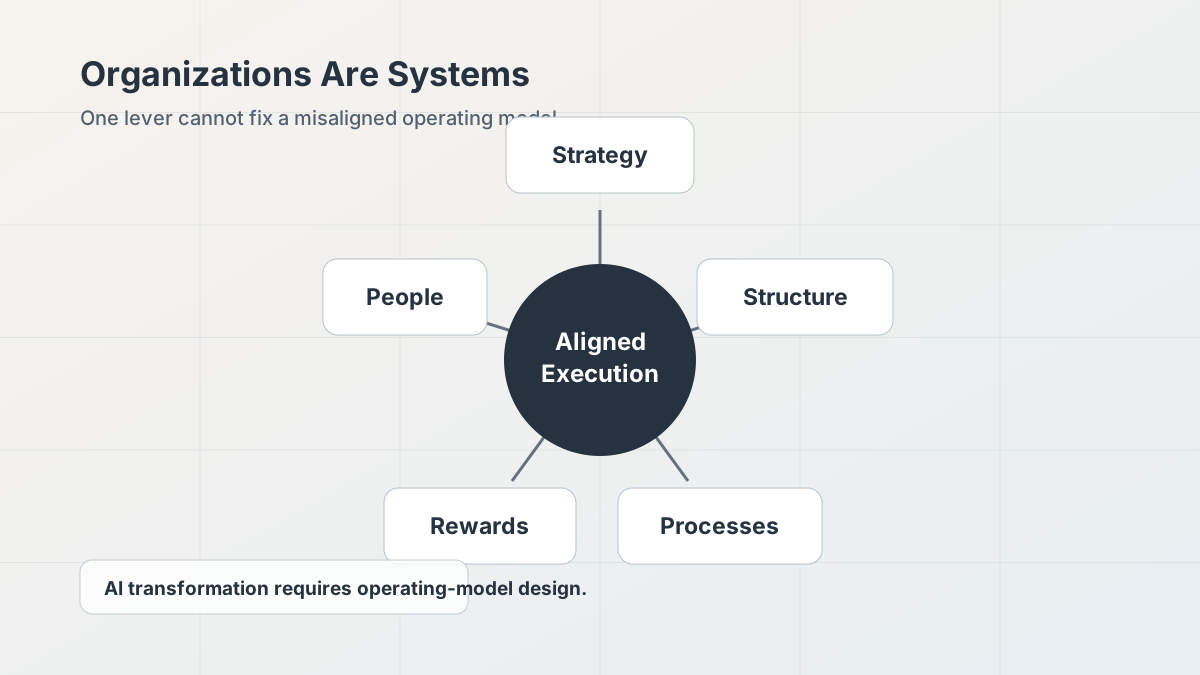
One of the most common organizational mistakes I see is companies trying to solve systemic business problems by pulling only one lever.
Usually the “people” lever.
A new leader. A reorg. New talent. Performance management. Training.
But organizations are systems. And systems rarely fail because of a single variable.
That is why I still find the Star Model incredibly useful. At a high level, it reminds leaders that five elements must work together:
Most companies focus heavily on one or two while ignoring the others.
You cannot implement an aggressive growth strategy while maintaining a structure optimized for stability and consensus.
You cannot demand cross-functional collaboration while rewarding purely individual performance.
You cannot expect accountability when processes are unclear or decision rights are ambiguous.
And you cannot “train your way out” of organizational design flaws.
This becomes even more important as AI reshapes work.
Many organizations are currently investing heavily in AI tools and training while leaving underlying workflows, incentives, leadership expectations, and operating structures untouched.
That is not transformation.
That is layering technology onto legacy systems.
The companies that will create real advantage over the next several years are the ones willing to redesign the entire operating model, not just modernize isolated components.
Talent matters enormously.
But talent alone cannot overcome a misaligned system.